
Premium Southern Bluefin Tuna
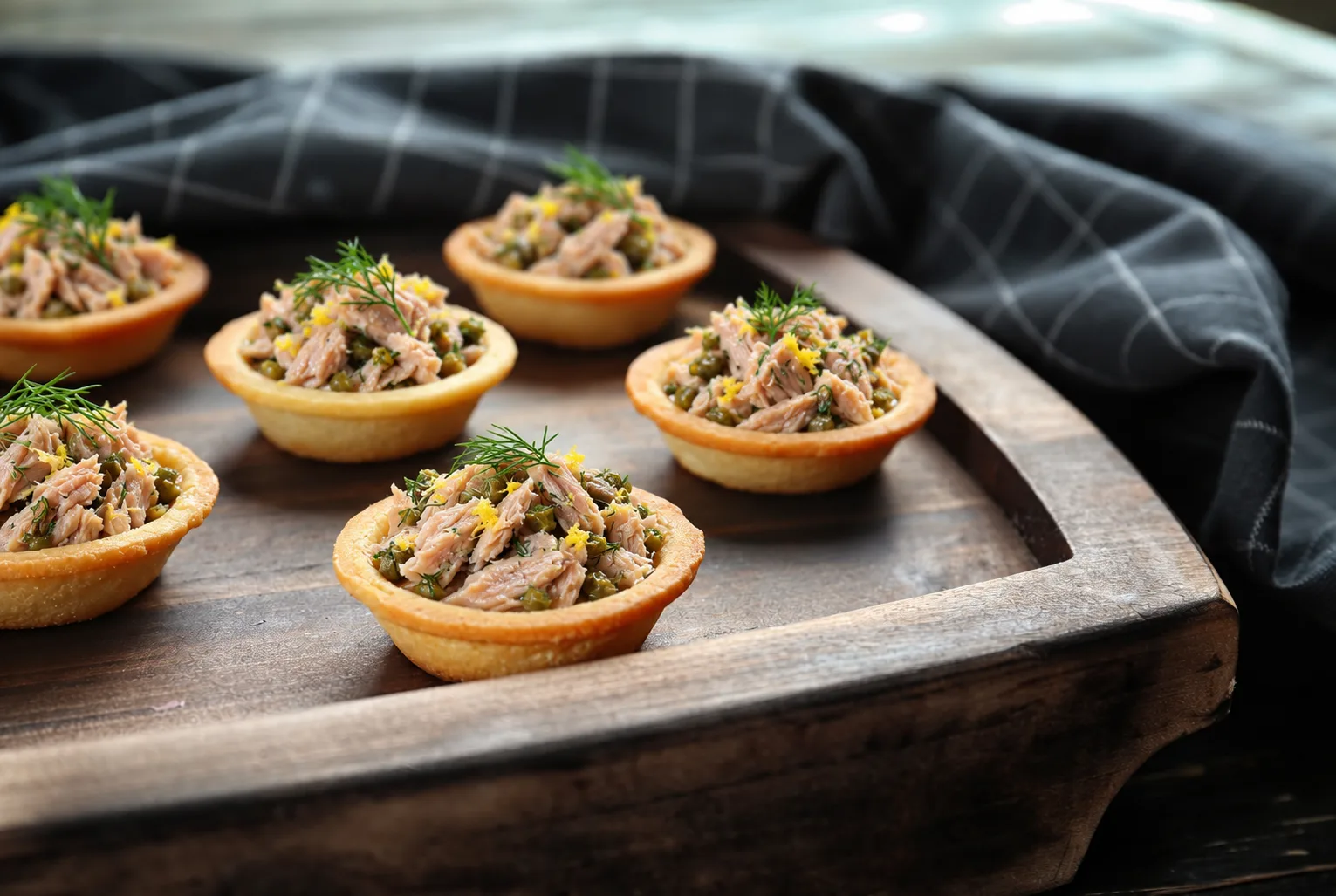
Mini Bluefin Tuna Tartlets With Lemon, Capers And Dill
A crisp pastry shell, generous flakes of premium Bluefin Tuna and a touch of lemon make these tartlets a standout addition to Christmas drinks. Capers, fresh dill and a light olive oil dressing complement the tuna without overpowering its natural flavour, letting the quality of the fish shine through.
For this recipe, we use Lukina’s Hand-Cut Bluefin Tuna with Sea Salt from our canned range. The simple seasoning pairs beautifully with lemon and herbs, while the hand-cut fillets hold their texture for a more satisfying bite. It’s a showcase of Dinko Seafoods’ commitment to quality and flavour.
Serve these tartlets on a small platter at home or assemble them in batches for a catered event. The key is timing: have all your components ready, but fill the pastry shells just before serving to keep them crisp.
- 24 ready-baked mini savoury pastry shells, approximately 4 cm wide.
- 300 g Lukina’s Hand-Cut Bluefin Tuna with Sea Salt, weighed after draining.
- 4 teaspoons extra virgin olive oil.
- 2 teaspoons fresh lemon juice.
- 1 teaspoon finely grated lemon zest.
- 3 teaspoons capers in brine, drained, patted dry and finely chopped.
- 4 teaspoons finely chopped fresh dill, plus small sprigs to garnish.
- Freshly cracked black pepper, to taste.
Method
1 Prepare The Pastry Shells: Check the packet instructions before starting. If the shells need baking or refreshing in the oven, do this first and allow them to cool completely before filling. Arrange the cooled shells on a tray so they are ready to assemble.
2 Mix The Lemon Dressing: Whisk the olive oil, lemon juice and zest together in a bowl. Stir in the chopped capers, dill and a little black pepper. Chop the capers finely so their briny flavour is evenly distributed throughout the filling, ensuring every bite is balanced.
3 Fold Through The Tuna: Drain the tuna well, then weigh out 300 g. Gently separate it into small flakes with a fork, keeping some pieces intact. Gently fold the tuna through the dressing until just coated. Take care not to overmix, as this preserves the delicate texture of the hand-cut fillets. Taste the mixture before adding any extra seasoning. The tuna is already seasoned with sea salt, and the capers add another layer of savoury flavour.
4 Fill And Finish: Spoon the filling into the pastry shells, letting it sit in a gentle mound rather than pressing it flat. Top each tartlet with a sprig of fresh dill for a bright finish. Serve the tartlets promptly. If preparing ahead, keep the filling covered and refrigerated, and assemble just before serving for the best texture.
OTHER RECIPES

Christmas BBQ Prawns

Southern Bluefin Tuna Bruschetta
Southern Bluefin Tuna and Cucumber Crostini
At Home: Put Out A Smaller Platter
For Christmas drinks, fill the shells halfway first, then refrigerate the remaining filling. Assemble the second platter when you need it.
This way, the pastry stays crisp and doesn’t soften under the filling during your gathering. Using ready-baked savoury shells also means your oven is free for any hot dishes you’re preparing.
For Venues And Caterers: Set The Portion Before Scaling
Fill one shell before committing to a large batch. Check that the filling sits neatly below or just above the rim and is comfortable to eat without cutlery.
Shell depth can vary, even if the diameter looks the same. Weigh the filling in your sample tartlet, then use that amount to calculate your quantities for the batch.
For a starting batch of approximately 120 tartlets, multiply the ingredients by five, using 1.5 kg of drained tuna. Confirm the yield with your chosen shells.
Keep the filling chilled and assemble smaller trays as needed throughout service. For off-site events, transport the filling and shells separately under refrigeration, then assemble at the venue when possible.
For Every Table: Keep Track Of Time
Keep the filling chilled until you’re ready to assemble, and minimise the time it spends out of refrigeration. For catering teams, remember that preparation, transport and display all add up to the total time between 5°C and 60°C.
Under the FSANZ two-hour/four-hour rule, food held in that range for under two hours can be served or refrigerated again. Between two and four hours, use it immediately; after four hours, discard it.
CONTACT
DINKO SEAFOODS
for all product enquiries


Head Office
112-120 Proper Bay Road,
Port Lincoln
South Australia, Australia
Postal address
PO Box 2013,
Port Lincoln SA 5606
© Copyright Dinko Tuna 2026. All rights reserved. Website by Brilliant Digital.