
Premium Southern Bluefin Tuna
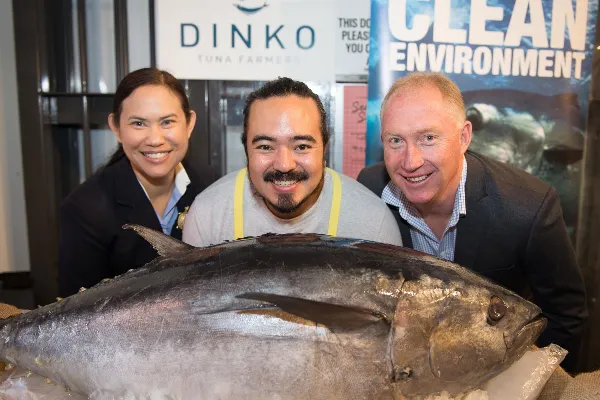
When purchasing any seafood, it’s important to remember that not all seafood suppliers are the same. When you’re investing in high-quality bluefin tuna, whether for a restaurant menu or for a sushi night at home, it’s important to ask your supplier or fishmonger some pointed questions.
A trustworthy bluefin tuna seller will always be transparent about how their fish is sourced and handled, their fishing processes, and the quality you can expect. Here, we’ve put together a handy guide of the five questions you should be asking before purchasing bluefin tuna, and why you should be asking them.
Where do they source their bluefin tuna?
One of the first things you should be asking is where the bluefin tuna comes from, as this will tell you a lot about the quality, handling, and processing. Bluefin tuna sourced from clean, well-managed waters tends to be much safer (and tastier) to eat.
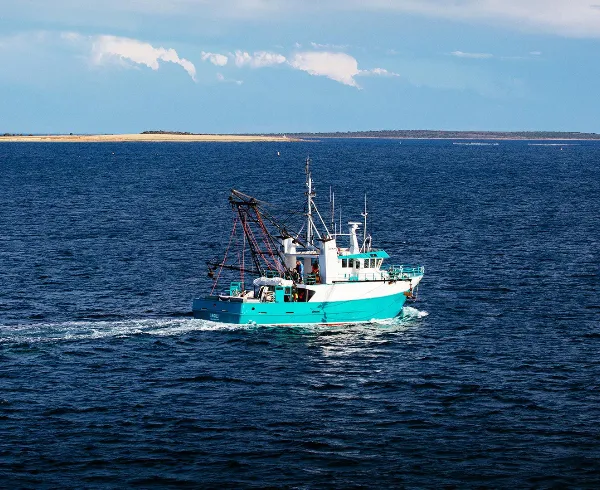
Dinko Seafoods’ Southern Bluefin Tuna is harvested in the pristine waters off the Eyre Peninsula in South Australia, known for its pristine waters and abundant marine life, as well as one one of the most well-managed fisheries. Knowing where your bluefin tuna is sourced from also means you can trace the supply chain.
If a supplier is vague about origin, that’s a red flag. Reputable suppliers will proudly share that their bluefin tuna comes from regulated, sustainable fisheries. Always choose a supplier who can pinpoint the exact region or fishery, as it shows transparency and usually a shorter time from ocean to plate, preserving freshness and quality.
Is it wild-caught or farm-raised (and how was it caught)?
Ask your supplier whether the tuna is wild-caught or farmed, and have them explain their fishing or farming methods. Wild-caught bluefin tuna means that the fish grew to maturity in the open ocean, while farm-raised (aquaculture) tuna are reared in captivity. While wild-caught may seem like the better choice, each approach has implications for quality and sustainability.
If a supplier offers fully wild-caught tuna, ask how they catch it, as the fishing methods have significant implications for both quality and sustainability.
Wild-caught methods can often be associated with overfishing and can have significant impacts on marine ecosystems, have high levels of bycatch, and poor fish welfare during and after capture. Pole-and-line or purse seining with minimal bycatch is preferable. If the tuna is farmed, ask about the farming conditions and diet. Top suppliers will feed tuna a high-quality diet.
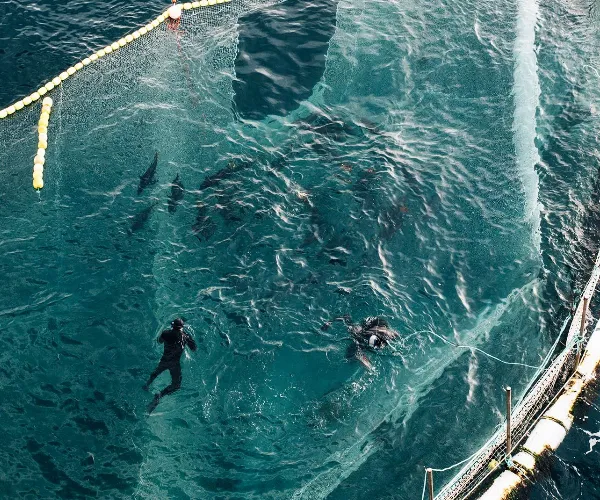
Dinko Seafoods combines the best of both fishing methods with our “catch and ranch” fishing method. Wild tuna are corralled into an open pen in the ocean using sardines, so the tuna aren’t distressed or caused any harm. Once the crew has secured the net, our expert divers jump into the water to make sure the tuna are mature enough and the school of fish is large enough. Only sufficiently mature fish (around 17kg or more) are kept, while smaller fish are released to protect populations. If the school meet the size and weight requirements, the crew usher the tuna from the original netting to tow cages. Once the fish are transferred, they spend the next three to six months grazing on sardines, where they grow fatter, rounder and oilier. Once fattened, experienced divers catch the tuna individually by hand to prevent bruising and stress to the fish.
This method not only helped replenish Southern Bluefin Tuna stocks but focuses on increasing the fish’s weight and quality without taking more fish from the ocean. In practice, this means tuna farmed by Dinko Seafood experience a natural life in the wild and then receive a controlled, rich diet in captivity to enhance their flavour and fat content.
The bottom line: whether wild-caught or farmed, a reliable supplier should describe how their methods are sustainable and ethical, and maintain flavourful and high-quality tuna.
Is it sashimi-grade quality?
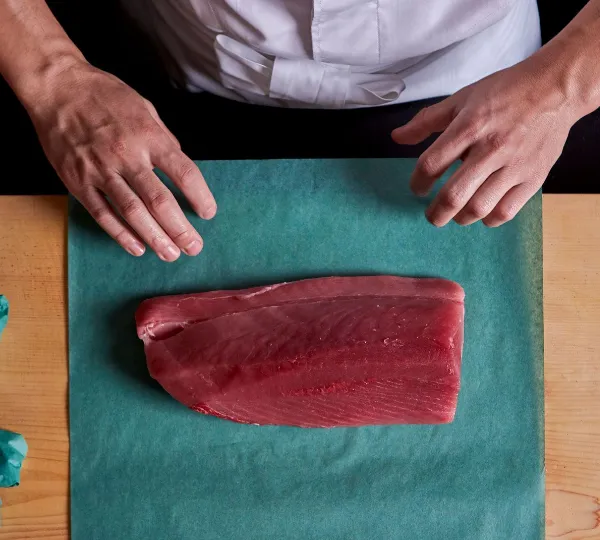
Southern Bluefin tuna is the most renowned of the tuna varieties and is the first choice for sashimi and sushi in restaurants around the world. If you want to enjoy your tuna raw, you need sashimi-grade tuna. Be sure to ask your supplier if their tuna is sashimi-grade, and what that means in terms of handling.
While “sashimi-grade” isn’t an official regulatory term, it indicates whether the supplier considers the fish safe and of high enough quality to eat raw. This generally means that the tuna has been handled with extreme care from ocean to plate, including the fishing method, harvesting technique, rapid chilling or freezing to prevent spoilage and kill any parasites, and pristine processing conditions.
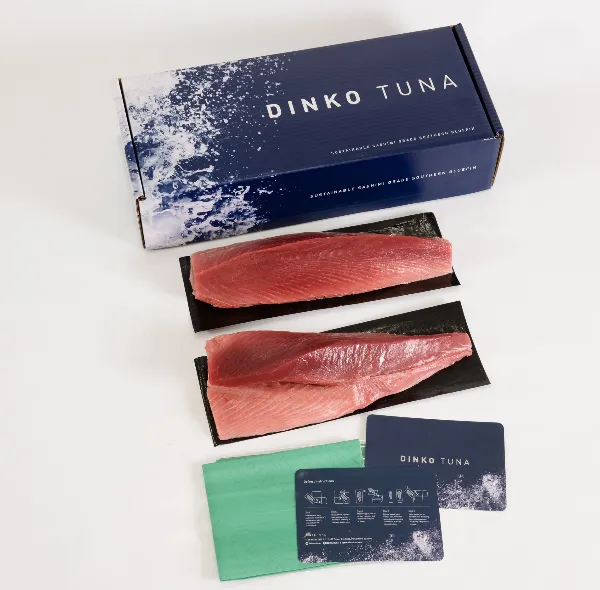
Dinko Seafoods’ Southern Bluefin Tuna is premium sashimi-grade Southern Bluefin Tuna. That status is earned by following sustainable fishing methods and strict handling procedures.
Not only are our tuna hand-caught for harvest, but they are super-frozen within hours to -60°C at a state-of-the-art facility. Freezing at ultra-low temperatures locks in the fish’s “ocean fresh” quality, eliminates the need for any harmful gases or preservatives to maintain colour, and removes any risk of parasites, making it safe for raw consumption. When thawed properly, the tuna’s texture and taste are as good as fresh-caught. Not all suppliers have this capability, so it’s a key question to ask.
Sashimi-grade tuna will have a deep, even colour and a fresh, clean smell. A knowledgeable supplier will proudly affirm that their tuna can be eaten raw and explain how they achieve that level of quality. If they can’t, you might not be getting the top-tier fish you’re after.
How do you ensure freshness and quality?
Even the best bluefin tuna can be ruined if it’s not handled properly after it’s caught. Ask your supplier what steps they take to preserve the freshness and quality of their catch during processing, storage, and transport.
Firstly, ask about how the fish is killed and cut, because that affects quality. High-end suppliers often use the Japanese iki jime method, a quick and humane harvesting method that euthanises the tuna immediately upon capture. Not only is this method the most ethical, as it minimises the stress to the fish, but it prevents lactic acid build-up which increased the quality of the meat. Dinko employs iki jime within seconds of the tuna leaving the water, ensuring the fish doesn’t suffer, and the flesh stays in peak condition.
Not only is this method the most ethical, as it minimises the stress to the fish, but it prevents lactic acid build-up which increased the quality of the meat. Dinko employs iki jime within seconds of the tuna leaving the water, ensuring the fish doesn’t suffer, and the flesh stays in peak condition.
Next, ask whether the tuna is handled individually or in small batches. Bruising can be a problem if fish are treated roughly. Dinko’s harvest process involves expert divers catching tuna one by one by hand during harvest to avoid bruising the meat.
Finally, ask about preservation. Key things to listen for include how quickly the fish is chilled or frozen, the method of freezing, and how it’s packaged. The goal is to prevent deterioration from the moment the tuna leaves the water. Tuna should be frozen immediately after catch, and kept at the correct temperature all the way to your kitchen. A reliable supplier will use vacuum-sealed packaging and continuous refrigeration or freezing. When your supplier can clearly explain these practices, you know your tuna will arrive as fresh and flavorful as possible.
Are their practices sustainable and ethical?
In today’s world, it’s important to buy seafood that is sustainably and ethically sourced. Always ask your tuna supplier about their environmental and ethical practices. Sustainable sourcing means the tuna population is managed and not overfished, and that the fishing or farming methods avoid undue harm to ocean ecosystems. Ethically sourced means considering both the marine life (through humane handling) and the local communities or workers. A top supplier will have good answers here and should have certifications to prove their commitment.
At Dinko Seafoods, a commitment to sustainability and ethics is at the heart of everything we do. Our Southern Bluefin Tuna come from a strict quota-managed fishery governed by state and federal authorities (the Southern Bluefin industry in Australia is one of the most heavily regulated fisheries in the world).
Quotas and monitoring ensure that only a sustainable number of tuna are taken each season, allowing the species to thrive long-term. Dinko’s pioneering ranching approach itself was developed to rehabilitate Southern Bluefin Tuna populations in Australia while still supporting the industry.
Dinko is also proud to hold industry accreditations with the Marine Stewardship Council, the Commission for the Conservation of Southern Bluefin Tuna (CCSBT), Friend of the Sea, and is certified Dolphin Safe. We are also part of the ‘Adopt a Beach’ program to monitor, clean up, and minimise debris impact on the Spencer Gulf coastline. We are also family-owned and have been stewards of the tuna industry for decades.
Want confidence in every cut of bluefin tuna you buy?
Choose Dinko Seafoods for traceable, sustainably sourced Southern Bluefin Tuna harvested with care . Contact our team today to place an order or learn more about our products.


Head Office
112-120 Proper Bay Road,
Port Lincoln
South Australia, Australia
Postal address
PO Box 2013,
Port Lincoln SA 5606
© Copyright Dinko Tuna 2026. All rights reserved. Website by Brilliant Digital.